Driving + Design
The Day My Jeep Changed How I Think About Software
By Neelesh VaikharyMay 24, 2026 • 8 min read
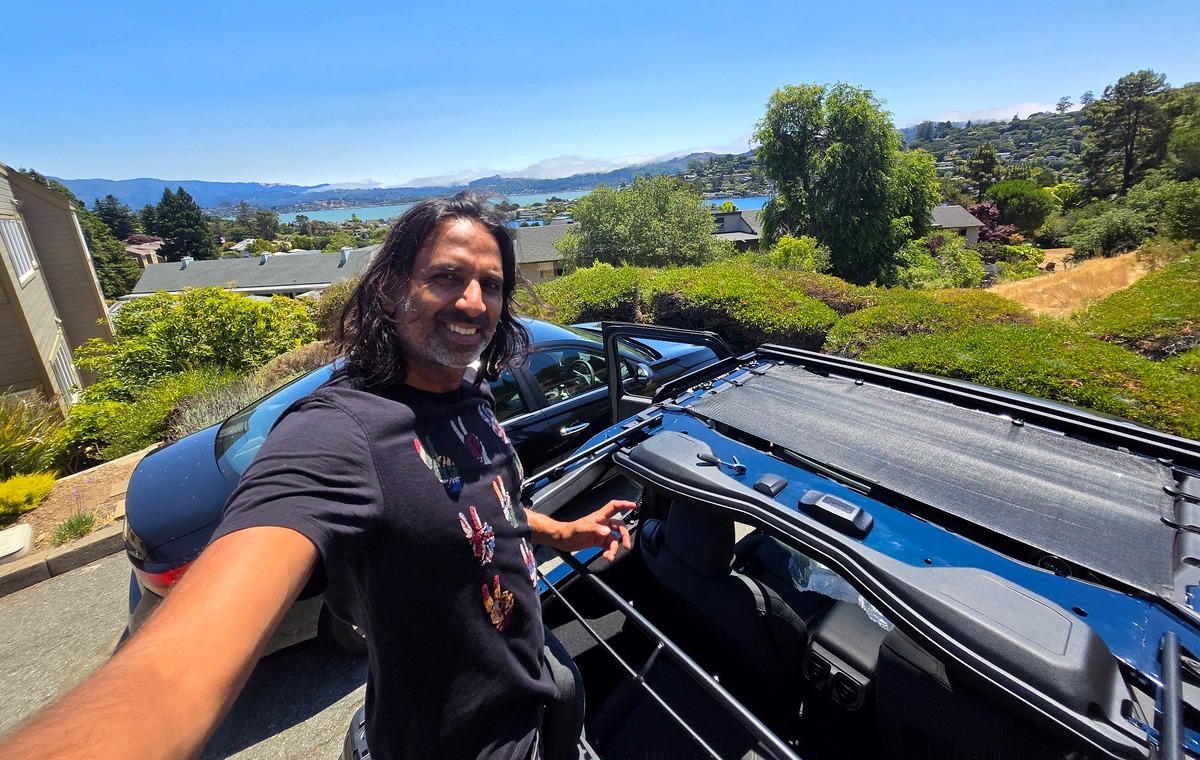
“A specialized machine is impressive… until the road changes. A modular machine adapts.
The Day My Jeep Changed How I Think About Software
I bought a Jeep Wrangler JL because I loved what it represented: freedom through modularity.
Modular by designDoors come off.
Roof comes off.
Suspension changes personality.
Tires redefine behavior.
One vehicle. Endless configurations.
Most cars optimize for one thing- smooth highways
- luxury commuting
- aggressive speed
- off-road crawling
A Wrangler is differentIt’s not perfect at one thing out of the box.
Instead, it’s designed to evolve.
That changed how I think about software engineering in the AI era.
🛠️ Tuning the Jeep
I didn’t want a rock crawler.
I wanted something that felt alive on winding Northern California roads while still being able to disappear onto dirt trails without hesitation.
So I started tuning it.
✣FOX suspensionfor tighter control and confidence through curves
✣Steering stabilizerimprovements to calm the road feel
✣Falken all-terrain tiresthat still behaved well on pavement
✣Top removedwhenever possible because driving should feel connected, not isolated
Every change altered the Jeep’s personality. Not by rebuilding the entire vehicle. Just by swapping components. The platform stayed the same. The behavior evolved.
🚘 Most Software Is Still Built Like Old Luxury Cars
Traditional enterprise software is usually built like a highly specialized vehicle.
Thousands of disconnected perfect products. But businesses are not static.
Why should software remain frozen?
Traditional software- Rigid.
- Heavy.
- Hard to modify.
- Need AI? Wrap another layer around the mess.
- Need mobile? Another rewrite.
Businesses today- healthcare provider
- ecommerce business
- social media brand
- hiring platform
- community
- content publisher
- AI-readable knowledge base
AI Exposes the Weakness of Specialized Software
AI doesn’t actually want your giant rigid application.
It wants clean building blocks.
Composable behavior. Structured intent. Reusable nouns and actions.
Everyone is trying to duct-tape AI onto systems that were never designed to evolve.
The foundation matters.
Why Modular Systems Win
A modular system behaves more like a Wrangler.
You don’t rebuild the platform. You reconfigure it.
That’s the philosophy behind what I’ve been building with lesscode.ai.
Small composable building blocks
Fluid UI
Reusable behaviors
AI-readable structure
Dynamic assembly
Same foundation. Different configuration. Exactly like tuning a Jeep.
The Funny Part
People think modular systems are less engineered.
In reality, they’re usually harder to design.
Anybody can build a rigid specialized system.
Designing something fluid takes restraint.
Nature already works this way. So do great machines. And increasingly, AI will too.
My Jeep Is Still Teaching Me
Some mornings I drive through Marin with the top off, suspension dialed in, tires humming slightly louder than they should.
And I realize: I’m not actually obsessed with Jeeps.
I’m obsessed with systems that evolve without losing their identity.
That applies to vehicles. And now, more than ever, software.
Customer Story
Camino Alto and the Living Heartbeat of Small Businesses
By Neelesh VaikharyMay 2026 • 6 min read
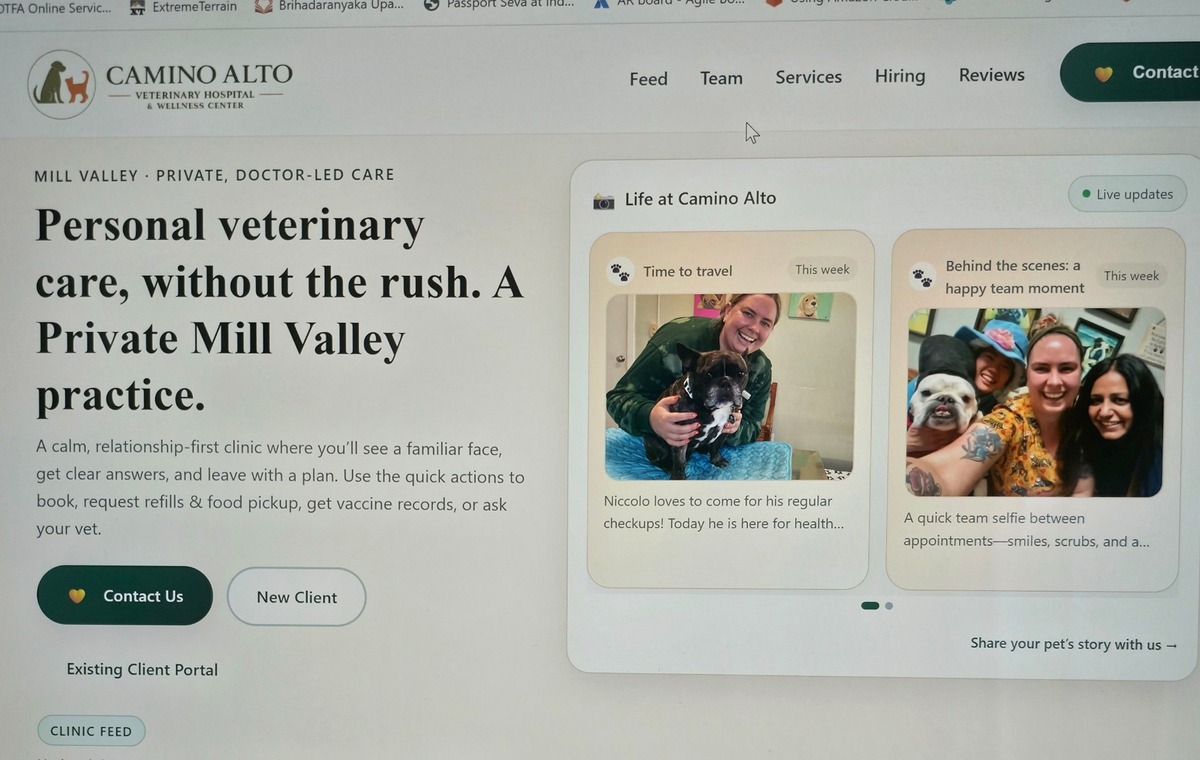
“A veterinary practice is not a brochure. It’s a living community.
The website should feel alive
For a long time, small business websites felt almost… apologetic.
A homepage. A phone number. A stock photo. Maybe a few service pages nobody updates.
Especially in healthcare and veterinary care. But that never felt right to me.
Every day there are stories happening inside the clinic.
That’s the real heartbeat of a practice.
Real moments matter
A modern small business website should continuously reflect the personality of the people behind it.
Because today, people don’t just choose businesses based on services. They choose based on feeling.
Before a client ever walks into the clinic, the website already starts building that trust.
Real petsPatient stories, recovery moments, first visits, and seasonal advice.
Real staffTechnicians, assistants, front desk staff, and veterinarians should be seen.
Real careThe website should reflect how the practice actually cares and communicates.
Simplicity still matters
Modern life is busy.
People don’t want to dig through menus or wait on hold just to request vaccine records or refill medication.
Everything should feel natural, fast, and approachable.
✣Appointmentssimple and warm
✣Prescription refillsfast and clear
✣Medical recordseasy to request
✣Questionsapproachable and personal
Small businesses still have soul
Your website is no longer just marketing.
It’s part of your personality, customer experience, culture, reputation, and relationship with your community.
Technology should amplify that humanity — not hide it behind sterile templates and generic workflows.
A modern website shouldn’t just describe the practice. It should reflect its living heartbeat.
Architecture
Living Software: Websites as Evolving Business Systems
By Neelesh VaikharyMay 2026 • 6 min read
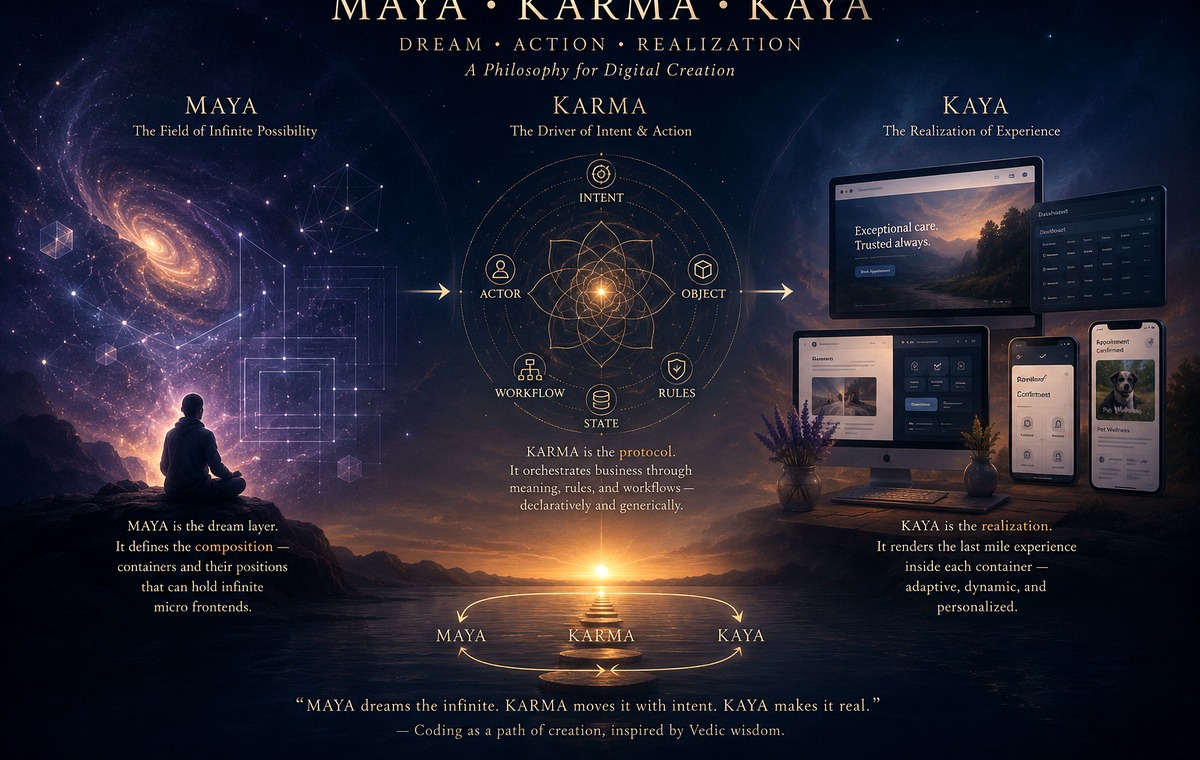
“For most of my career, I thought software engineering was about building systems. Now I think it’s about building living organisms.
Software as a living system
Modern software engineering became obsessed with specialization.
One team owns APIs. Another owns databases. Another owns frontend. Another owns infrastructure. Another owns AI prompts. Another owns workflows.
Thousands of layers. Millions of wrappers. Endless abstractions stacked on abstractions.
We kept optimizing software like factories. But humans don’t work like factories. Humans work like living systems.
experienceImagination. Experience. Possibility. Living interface.
actionInteraction. Intent. Action. Cause and effect.
structureThe body. Physical manifestation. Realization.
experience is imagination
experience is the infinite projection layer: dreams, possibilities, identity, experience.
In software terms, experience is the experience layer — the UI, the personality, the emotional connection, the fluidity, the shape-shifting interface AI can continuously evolve.
Not static screens. Living imagination.
action is interaction
action is intent, action, cause and effect.
Every human system runs on action. You think. You act. The world responds. You evolve.
Every business repeats the same karmic patterns: schedule, buy, sell, heal, teach, share, approve, reject, communicate, transform.
structure is the body
structure is the thing that finally materializes imagination and action into reality.
Humans have a body. Businesses have a body. Software has a body too: databases, workflows, interfaces, infrastructure, state, memory, identity.
But modern software bodies are fragmented — disconnected organs stitched together with APIs and duct tape.
AI exposes the ceremony
Most software was never truly intelligent.
It was procedural ceremony: massive amounts of code just to express very small human intentions.
experience continuously imagines. action continuously interacts. structure continuously reshapes itself.
Still early
AI isn’t the end of software engineering.
It’s exposing that we may have been modeling software incorrectly all along.